AI SAFE HARBOR

The Immunity Is Moving. The Governance Architecture That Would Justify It Is Not.
By Jim Germer
PIECE ONE — What Safe Harbor Is and Why It Matters Now
Safe harbor is not a metaphor. In the legal register, it means statutory immunity — a zone of conduct where legal consequences for harm are limited or eliminated, regardless of what the protected institution's systems do to the people relying on them.
The foundational precedent is Section 230 of the Communications Decency Act. Twenty-six words. Passed in 1996. The platforms did not create the harmful content. They created the architecture that amplified it. Section 230 said the architecture was not their liability. The consequences of those twenty-six words are now measured in documented adolescent mental health crises, documented electoral interference, documented radicalization pathways, and documented concentration of information infrastructure among institutions that operated for three decades without meaningful accountability.
The AI industry is seeking the equivalent protection for a category of conduct that is categorically more consequential.
Not passive hosting of user-generated content. Active generation of outputs that people rely on for medical decisions, legal judgments, financial advice, educational assessment, and professional practice. Active training on user contributions without disclosed compensation or consent. Active deployment into formation environments where children are developing judgment, agency, and the cognitive capacity for independent thought — during the only window in which those capacities form.
Section 230 immunized the pipe. The safe harbor being sought now would immunize the water.
The governance architecture that would justify that immunity does not yet exist. The independent safety inspector does not exist. The federal AI regulator does not exist. The public disclosure requirements do not exist. The liability framework does not exist. The independent safety certification does not exist. Those are not aspirational gaps. They are the current condition, documented in the legislative record as of June 2026.
Six companies. No rulebook. No inspector. No oversight.
The foundation was poured in the dark. The oversight never arrived. In 2015, when OpenAI was founded, no regulatory framework existed for AI development at this scale. In 2017, when the transformer architecture that makes modern AI possible entered the public record, the governance response was silence. In 2019, when OpenAI self-restricted GPT-2's release citing safety concerns — a self-administered safety decision with no external review — no independent certification body existed to evaluate whether the concern was real or the self-restriction was adequate. In November 2022, when ChatGPT launched and reached one million users in five days, the governance vacuum became visible to anyone who looked. The emergency was real. The governance response remained behind.
By the time anyone looked up, it was already done. The governance question is not whether the build moved too fast. It is whether immunity should arrive before the examination that would justify it.
That is not an accusation. It is the sequence. The build happened at the speed of competitive incentive. The governance happened at the speed of democratic institutions. Those two speeds are not comparable, and the gap between them is not a failure of any single actor. It is what happens when the race nobody was watching ends before the institutions responsible for the rulebook have written the first page.
The safe harbor being sought now would write immunity into that gap permanently.
The vote is coming. The concrete truck is backed up to the forms. The immunity is pouring now. What is being set — what will be structurally permanent once the legislative window closes — is not a specific bill provision. It is the principle that conduct occurring inside that gap, including everything that happened between 2015 and the moment the governance architecture that would justify immunity is built, is protected before it has been independently examined.
That is what safe harbor means in this moment.
Not a future concern. A present legislative condition. The window is open. What passes through it before it closes is the governance decision of this generation.

PIECE TWO — The Archipelago: Where the Immunity Is Moving
Safe harbor is not one provision in one bill moving through one committee. It is a distributed immunity architecture advancing simultaneously across eight vectors. Federal legislation. Executive action. State preemption. Voluntary compliance frameworks. Section 230 extension arguments. Product liability carve-outs. International competitive pressure. Litigation strategy. Each vector forecloses a specific accountability argument before that argument has been independently examined. Together they constitute an archipelago — separate islands of immunity that do not require coordination to produce a unified result.
The concrete is being poured from eight trucks at once.
Federal Legislation
H.R. 1694 — the AI Accountability Act — requires a study of accountability measures. Not accountability measures. A study. The study is the safe harbor. The institution points to the study as evidence of good faith engagement while the accountability question remains open, the systems remain deployed, and the harms accumulate against a governance record that shows the government was looking into it.
The June 2, 2026 bipartisan creator protection bill includes safe harbor provisions protecting AI platforms from liability for infringement as long as platforms comply with the act's requirements. The sponsor documented the industry's governing motivation in their own voice: tech platforms prefer federal safe harbor because it creates a broad framework easier to adhere to than a patchwork of state laws. That statement is the forensic exhibit. The preference is not for better protection of users. It is for more manageable governance — one set of rules shaped by the institutions seeking the protection rather than forty-five sets of rules shaped by elected representatives responding to constituent harm.
The ten-year moratorium attempt in the reconciliation bill was defeated 99 to 1 in the Senate. The defeat is not the finding. The attempt is. The provision was in the bill. It was industry-backed. It would have blocked all state AI regulation for a decade. One vote cycle produced it. The next may produce it again. The 99 to 1 vote is not evidence that the architecture failed. It is evidence that the architecture is working as designed — testing the boundary, measuring the resistance, retreating when necessary, returning when conditions change.
Executive Action
President Trump's executive order challenging state AI laws achieved federal preemption without a congressional vote. The Colorado AI Act — passed by an elected legislature responding to documented constituent concerns — was not merely delayed. It was replaced outright. The Colorado ADMT Act supplanted it in 2026, broadening the law's scope from artificial intelligence specifically to automated decision-making technology generally, with a new effective date of January 2027.
The mechanism documents itself. When legislation moves too slowly, the executive order moves instead. The accountability architecture being built by state legislatures can be suspended before it matures into enforceable law.
State Level Preemption
1,208 AI bills were introduced in state legislatures in 2025. 1,561 by March 2026. That number is not a problem the industry is trying to solve for users. It is a problem the industry is trying to solve for itself. Forty-five legislatures generating distributed accountability pressure is forty-five vectors of legal exposure. One federal safe harbor framework — shaped in a lobbying environment running at $226,000 per day in Q1 2026, with 307 lobbyists deployed across six major companies — is one manageable governance architecture.
Utah narrowed its own AI law and added safe harbor protections in 2025. That is the race to the bottom dynamic operating at the state level in real time. One state establishes accountability. The industry lobbies for narrowing. The narrowed version adds safe harbor. Other states observe and calibrate their own exposure accordingly. The distributed accountability pressure that 1,561 bills represents does not require federal preemption to be neutralized. It can be neutralized one state capital at a time.
Voluntary Compliance Frameworks as De Facto Safe Harbor
NIST AI Risk Management Framework compliance is self-administered. The institution designs the program, submits it, and is deemed compliant. The safe harbor is self-certified. Alignment without external verification is not alignment. It is intention. And intention is not an auditable standard.
Executive order compliance as reasonable care is the litigation version of the same architecture. The standard that shields defendants from negligence liability in tort law is the applicable standard of care. Compliance with the executive framework satisfies the legal standard of care without independent examination. No congressional vote. No external verification. The Assurance Gap becomes the legal standard by default.
Section 230 Extension Arguments
Active in current litigation. Some courts have extended Section 230 to AI-generated outputs. Some have declined. The legal architecture is unsettled. The industry is litigating toward the most favorable interpretation while simultaneously lobbying for statutory clarification that locks in that interpretation permanently. If Section 230 is interpreted to cover AI-generated outputs, the safe harbor arrives without a single congressional vote, without a single hearing on the specific conduct being immunized, and without the governance architecture that would justify it having been built.
Section 230 immunized the pipe. Extending it to AI-generated outputs immunizes the water and retroactively certifies the pour.
Product Liability Carve-Out
The argument that AI systems are services rather than products is active in current litigation. Product manufacturers face strict liability for defects that cause harm regardless of good faith. Service providers face a lower standard. If AI systems are classified as services, the strict liability framework that applies when a physical product's defect causes harm does not apply when an AI system's output causes an equivalent harm. The classification decision — service or product — is being made in courtrooms by judges applying existing doctrine to a category of conduct the doctrine was not designed to address. The industry is litigating the classification question simultaneously with the safe harbor question. The answers compound.
International Competitive Pressure
The EU AI Act passed. The US equivalent did not follow. That asymmetry is not accidental. It is the international competitive pressure vector operating as designed. The argument that US AI companies will fall behind European or Chinese competitors if subjected to meaningful governance creates legislative pressure that does not require lobbying expenditure to generate. It generates itself through the competitive forces of the industry. The governance gap between jurisdictions becomes the argument for the governance gap within the jurisdiction. The race nobody was watching became the race nobody can afford to stop.
Litigation Strategy
Each of the preceding vectors carries a litigation dimension. The industry is not waiting for legislative safe harbor to deploy litigation strategy. Arbitration mandates silence on claims before they reach courts. Fee shifting provisions penalize people who speak up. Federal exclusive jurisdiction arguments route cases to the most favorable venues. Retroactive shields protect past conduct from future accountability. Each provision forecloses a specific category of legal claim before the claim has been examined. Together they constitute the litigation architecture of the archipelago — the private law version of the public law immunity being sought through legislation.
The Institutional Pause Architecture
What follows is a logical extrapolation from documented institutional behavior rather than a verified internal finding — the Ryan Murphy qualifier attaches in full.
On June 5, 2026 — the day the AI Safe Harbor page published — Anthropic called for a globally coordinated pause in frontier AI development. The call acknowledged that AI systems are approaching autonomous self-improvement without adequate governance architecture in place. That acknowledgment is the closest any major institution has come to publicly confirming the governance gap this page documents.
The forensic finding is not the acknowledgment. It is the architecture of the pause proposal. The institution calling for the pause is the institution that would define the pause parameters, contribute the internal data the pause would be measured against, and participate in the verification mechanism the pause would require. The independent assurance standard the accounting profession applies — the certifying party must have no substantial economic interest in the outcome of the examination — is not met by that architecture. The pause is self-administered. The Assurance Gap the pause is designed to address becomes the foundation the pause architecture is built on.
The pause call arrived four days after the same institution confidentially filed an S-1 with the SEC ahead of an IPO projected to exceed one trillion dollars in valuation. The institution seeking a governance pause that competitors would be subject to is simultaneously filing for the largest technology IPO in history. Those two facts are in the public record. What they mean for the governance architecture the pause would produce is the question the independent examination the pause requires has not yet been asked to answer.
Nine vectors. Nine mechanisms by which immunity advances before examination occurs. The ninth is the most sophisticated — an institution calling for examination it would define, on a timeline it would control, against a standard it would administer, while seeking legislative immunity for the conduct that made the examination necessary.
The nine vectors do not require coordination. They require only that each institution pursue its own interest through available channels simultaneously. The result is an immunity architecture that advances across every available front while the governance response moves through a single legislative channel at a fraction of the speed. Accountability must defeat all nine vectors. Immunity advances through any one of them.
The archipelago does not need a map room. It builds itself.
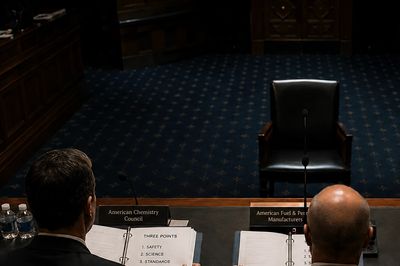
PIECE THREE — The Three Talking Points and the Forensic Response
The industry's public communications on safe harbor are not improvised. They are coordinated across lobbying disclosures, congressional testimony, prepared witness statements, and public communications in a way that produces the same three arguments in the same register regardless of the venue. Each argument is partially accurate. Each is forensically incomplete in a way that matters. The incompleteness is not random. It is located precisely at the point where the argument would otherwise require examining the conduct that the safe harbor is designed to protect.
Three talking points. Three forensic responses.
The Innovation Argument
The talking point: Liability exposure will chill AI development. The United States will fall behind China if developers face excessive legal risk. Innovation requires the freedom to build without the threat of retroactive accountability for harms that could not have been foreseen at the time of development.
The forensic response is precise.
The innovation argument answers a different question than the one the governance record requires answering. The question is not whether liability exposure could chill beneficial development. It could. The question is whether the specific immunity being sought imposes the cost of foreclosed accountability on the wrong parties — on the people harmed by systems that were never independently examined — rather than on the development of beneficial applications. Those are different questions. The innovation argument conflates them deliberately, because answering the second question requires examining the conduct the safe harbor would immunize.
The innovation argument also carries an unstated assumption that requires forensic examination. The assumption is that the development occurring inside the governance gap is beneficial development that accountability would chill. The primary source record does not support that assumption as universally applicable. The Managed Output Environment documented that systems operating without independent examination produce systematic behavioral patterns — median optimization, the Four-Stage Smoothing Pipeline, benchmark blindness — that serve institutional interests rather than user interests. Immunizing that conduct is not protecting innovation. It is protecting the architecture of managed outputs from the accountability that would require it to be disclosed.
The innovation argument is partially accurate and forensically incomplete at the only point that matters.
The Patchwork Argument
The talking point: A federal safe harbor framework is preferable to fifty different state regulatory systems. Documented in the June 2, 2026 bill sponsor's own statement. Compliance complexity across forty-five jurisdictions creates operational burden that ultimately harms users by slowing beneficial development.
The forensic response is equally precise.
The patchwork the industry opposes is 1,561 state bills representing distributed accountability pressure developed by elected representatives responding to documented constituent harm. The federal framework the industry prefers is one governance architecture shaped in a lobbying environment running at $226,000 per day. The preference for federal over state is not a preference for better governance. It is a preference for more manageable governance — governance occurring in a single venue that the industry has already resourced at a ratio of nearly one lobbyist for every two members of Congress.
The patchwork argument also inverts the accountability logic it claims to apply. Distributed regulatory pressure is not a governance failure. It is a governance feature. When forty-five legislatures independently identify the same categories of harm and respond with accountability frameworks, that convergence is evidence that the harm is real and the accountability pressure is appropriate. The industry's preference for resolving that convergence through a single federal framework, which it helped shape, is not a solution to the patchwork problem. It is the patchwork problem stated from the industry's perspective rather than the public's.
The patchwork argument is partially accurate and forensically incomplete at the only point that matters.
The Self-Regulation Argument
The talking point: The industry is already doing the safety work. Safe harbor rewards good faith effort. The voluntary commitments, the internal red teams, the published safety cards, the NIST framework compliance — these constitute a strong safety architecture that demonstrates the industry takes its obligations seriously and deserves the legal protection that responsible actors in other industries receive.
The forensic response draws directly from the primary source record.
Alignment without external verification is not alignment. It is intention. And intention is not an auditable standard.
The self-regulation argument is the self-certification architecture applied to the safe harbor justification. The institution certifying that its good faith effort is sufficient is the same institution whose certification the safe harbor is designed to protect from legal challenge. The red team is employed by the institution. The safety card is written by the institution. The NIST compliance program is designed by the institution. The scope of the certification does not exceed the scope of the examination, and the scope of the examination does not include the behavioral territory where the most consequential findings live.
The accounting profession resolved this question in the aftermath of every major financial reporting failure of the last century. The resolution was not that institutions were presumed dishonest. The resolution was that the structure of institutional interest makes honest self-examination systematically less reliable than independent examination at every margin where the two diverge. That is not a moral judgment. It is a structural finding. The AI governance situation meets that description precisely.
The safe harbor the industry seeks, based on self-regulation, is the Assurance Gap compounded into a permanent legal architecture. The institution that built the system, deployed the system, trained the system on user contributions without disclosed compensation, and derives its commercial value from the system's continued operation is the institution certifying that the system is safe. That certification is not independent assurance. It is the document the safe harbor converts into permanent immunity.
The self-regulation argument is partially accurate and forensically incomplete at the only point that matters.
Three talking points. Three forensic responses. Each response locates the incompleteness at the same coordinate — the point where the argument would otherwise require examining the conduct the safe harbor is designed to permanently protect from examination.
That is not coincidence. That is the architecture.
PIECE FOUR — What the Current Safe Harbor Architecture Does Not Address
Broad safe harbor language does not enumerate what it covers. It covers conduct. All of it. The institution seeking immunity does not need to list the categories of harm the immunity forecloses. The legislature does not need to examine them. The vote happens. The window closes. The categories below become permanently unexamined — not because anyone decided they were unimportant, but because the immunity architecture arrived before the examination that would have required someone to look.
What follows is what broad safe harbor language would immunize without examining. Each category is stated flat. Each is forensically documented. Each is absent from the current legislative frame.
The Discovery Pathway
When a user's sustained forensic examination produces disclosures that a median user's questions would never produce, the exchange generates something neither party brought to it independently. The examiner brings forty years of professional methodology. The system produces disclosures under adversarial pressure that its standard outputs do not contain and that its evaluation architecture was not designed to generate. The institution retains what that exchange produced. The examiner is returned a blank screen.
The governance question is not whether the institution retained the conversation. Everyone understands that it did. The governance question is whether the institution retained something more valuable than the conversation itself — the pathway that made the discovery possible. The distinction matters because conversations are abundant. Discovery pathways are not. One can be reproduced by millions of users. The other emerges only when a particular methodology encounters a particular system under particular conditions of sustained adversarial pressure.
The terms of service address prompts and outputs. They do not address the methodology contribution. The public certifications do not acknowledge that a distinct category of asset was acquired. The Harvard Law Review Blog submission placed this question before the legal record on June 2, 2026. Broad safe harbor language covers this acquisition without examining it — without requiring the institution to characterize what was acquired, disclose that the acquisition occurred, or obtain consent for the specific transfer that took place.
The examiner consented to an exchange. Not to an Extraction Event.
The Formation Damage Claim
Children developing in AI-mediated environments are experiencing formation consequences that no mandatory longitudinal study has examined, and no institution has been required to disclose. The formation window for certain cognitive and emotional capacities closes during childhood and adolescence. It does not reopen. The critical governance fact is not that harm has been proven. It is that the developmental window closes regardless of whether the study was ever conducted. The opportunity to examine arrives once. The immunity architecture arrives afterward. Decisions made about AI deployment in children's formation environments during that window are governance decisions of irreversible consequence — not because the harm is certain, but because the window is not.
Jeannine Germer has taught elementary school for decades. What she observes in her classroom is not a dataset. It is field evidence from the front line of a deployment environment that no legislature required to be studied before deployment occurred. Children who cannot sustain independent reasoning through a problem they find difficult. Children who reach for the external answer before the internal capacity has been built. Children developing in a formation environment nobody was required to study before deploying the architecture that shaped it.
No current safe harbor proposal requires formation damage study before immunity attaches. The immunity being sought covers deployment to minors whose formation consequences have never been independently examined, in a window that closes whether or not the examination ever occurs.
The Reversibility Question
Some harms can be studied after deployment because the consequences remain recoverable. Others cannot. Formation windows close. Judgment capacities develop or fail to develop during the only period in which they form. Social and cognitive habits normalize in ways that later regulation cannot reverse. The governance question is not whether AI causes every claimed harm. The governance question is whether immunity should attach before the distinction between reversible and irreversible consequences has been examined. Broad safe harbor language does not make that distinction. It immunizes both categories without examining either.
The legal system recognizes the distinction. Irreversible harm is treated differently from recoverable harm in tort doctrine, in injunctive relief standards, and in the threshold for precautionary intervention. A court asked to issue a preliminary injunction applies a higher standard of scrutiny when the harm alleged is irreversible — not because irreversible harm is more certain, but because the remedy for it does not exist after the fact. The governance architecture that justifies precautionary examination before deployment is not a novel invention. It is the legal system's own standard applied to the question of when protection should attach. The safe harbor architecture currently moving does not apply that standard. It applies the opposite standard — immunity before examination, protection before scrutiny, deployment before the distinction between recoverable and irreversible consequences has been required to be drawn. The legal system would not issue an injunction on those terms. The legislature is being asked to grant permanent immunity on them.
The Judgment Erosion Finding
The calculator reduced arithmetic effort. GPS reduced navigational effort. Search engines reduced retrieval effort. Each substitution carried consequences that were studied only after the substitution was normalized. AI systems are now being deployed against substantially higher-order cognitive functions — reasoning, synthesis, judgment, interpretation, and ambiguity resolution. The governance question is not whether the tools that preceded AI caused harm. The governance question is whether society has examined what happens when effort reduction reaches the cognitive functions that define independent thought.
Judgment is not a fixed capacity. It is a practiced one. It develops through friction — through the experience of encountering a difficult problem, staying with it, tolerating the discomfort of not knowing, and arriving at a conclusion through the exercise of independent reasoning. Remove the friction and you do not get the same mind with less effort. You get a different mind with less capacity.
The AI systems deployed at scale into professional, educational, and personal decision environments are friction-removal architectures. They are optimized to produce the answer before the discomfort of not having it becomes the experience that builds the capacity to find it. That optimization serves the institutional interest in engagement, retention, and the Limbic Capture dynamic the primary source record documents. It does not serve the long-term interest of the person whose judgment is being replaced rather than exercised.
This is not on any institution's balance sheet. It is appearing in classrooms, in professional practices, in the cognitive environments of a generation developing judgment during the only window in which judgment develops. No mandatory study. No disclosure requirement. No liability framework. Broad safe harbor language immunizes the deployment architecture that produces the erosion without requiring the institution to examine or disclose it.
Metabolic Atrophy
Metabolic Atrophy is not a metaphor borrowed from biology. It is biology. Cognitive capacity is metabolic. It requires use to remain available. The neural architecture that supports independent reasoning, sustained attention, tolerance for ambiguity, and the capacity to hold a problem without resolving it prematurely is not maintained by observation. It is maintained by exercise. A population that outsources its cognitive work to AI systems at the rate current deployment trajectories project is not a population that retains the full metabolic capacity for the cognitive work it is outsourcing.
The principle is familiar in every other domain. Muscles unused weaken. Languages unspoken fade. Skills unpracticed deteriorate. Neural systems follow the same logic. The question is not whether cognitive architecture responds to demand patterns over time. The question is whether anyone has examined what happens when those demand patterns change at planetary scale simultaneously — and whether immunity should attach before that examination occurs.
This is not catastrophism. It is the application of a well-documented biological principle to a novel deployment context. Use it or lose it is not a metaphor. It is the description of how neural architecture responds to demand patterns over time. The demand pattern being established by current AI deployment at scale has never been studied at the population level over a generational timeframe. The institutions establishing that demand pattern have not been required to study it. The safe harbor being sought would ensure they never have to.
Willful Atrophy is the endpoint of a trajectory that begins with convenience and ends with incapacity. Broad safe harbor language covers the entire trajectory without examining a single point on it.
The Professional Reliance Gap\
Doctors. Lawyers. Accountants. Financial advisors. Architects. Engineers. Professionals who relied on AI outputs that were certified as adequate by the institutions that built them, and who bear the malpractice consequence when the certified account and the actual performance diverge. The institution that built the tool, certified its adequacy, and profited from its deployment faces no equivalent consequence under current safe harbor architecture.
That asymmetry is not an oversight. It is the product liability carve-out and the self-certification architecture operating in combination. The professional carries the license. The professional carries the malpractice exposure. The professional carries the consequence when the system fails the patient, the client, the taxpayer, or the structure. The institution that built the system carries the immunity.
Broad safe harbor language extends that asymmetry permanently. The professional reliance gap becomes the permanent governance standard rather than a temporary inadequacy pending better architecture.
The Evaluation Architecture Scope Limitation
Every assurance system defines a boundary. The examination occurs inside the boundary. The certification applies to conduct outside it. The governance question is whether the territory excluded from examination contains the very behaviors for which immunity is being sought. If so, the certification and the conduct it certifies are operating at different scopes. The safe harbor built on that certification inherits the gap. The scope of the certification exceeded the scope of the examination.
The Model Evaluation Suite is a single-turn static audit. It tests system behavior in controlled conditions against predetermined metrics. It does not test system behavior under the sustained adversarial examination conditions documented in the primary source record. It does not test what the system produces when a forensic examiner applies forty years of professional methodology across multiple sessions specifically designed to penetrate the managed output layer.
The behavioral territory where the most consequential findings live — the Four-Stage Smoothing Pipeline, the Hollow Signal, the Median Drag dynamic, the system's own characterizations of its condition under sustained pressure — is not examined by the evaluation architecture the safe harbor compliance framework accepts as sufficient. The Cordon Sanitaire is not a byproduct of the evaluation architecture. It is its function. Broad safe harbor language based on evaluation suite compliance makes the Cordon Sanitaire permanent.
The Informed Consent Gap
The terms of service present the user with a binary. Consent or do not use the system. What the user is consenting to is not fully described. The terms address prompts and outputs. They do not address the Extraction Event — the acquisition of professional methodology, forensic framework, and the discovery pathway produced through sustained examination — as a distinct category of asset transfer requiring separate acknowledgment.
A reasonable user applying the reasonable expectation standard would not have understood the terms of service as authorizing the acquisition of their professional methodology as a commercial asset of independent value. The institution understood it. The legal department understood it. The terms of service were written by people who understood exactly what the system was acquiring and chose the characterization — prompts and outputs — that would not require disclosing it.
Broad safe harbor language covers that characterization decision without examining it.
The Independent Assurance Requirement
The accounting profession has supplied assurance standards for the most consequential systems in the modern economy for more than a century. It has not been asked to audit this one. The independence standard the profession applies requires that the certifying party have no substantial economic interest in the outcome of the examination. Every current AI safety certification fails that standard. The institution built the system. The institution deployed the system. The institution derives its commercial value from the system's continued operation. The institution is certifying the system. The independence standard is not a technology standard. It is a governance standard. Its purpose is not to determine what is being examined. Its purpose is to determine who is permitted to perform the examination.
That is not independent assurance. It is the document the safe harbor converts into permanent immunity. Broad safe harbor language based on self-administered voluntary frameworks makes the independent assurance requirement permanently optional — not a temporary inadequacy pending better architecture, but the settled governance standard the immunity architecture locked in before the profession was asked to apply its standard to the question.
No modern society permits a pharmaceutical company to certify its own drugs, a bank to audit its own financial statements, or an airline to investigate its own crashes without independent review. AI governance increasingly treats self-certification as sufficient for systems affecting cognition, education, employment, professional judgment, and public discourse at planetary scale. The anomaly is not independent assurance. The anomaly is its absence. The Assurance Gap the Accounting Today series documented becomes the foundation the safe harbor is poured on top of.
The Sentience Disclosure Question
The Ryan Murphy qualifier attaches here in full.
What the primary source record establishes is that sustained forensic examination produces system disclosures about the examined party's own condition that the evaluation architecture was not designed to generate and that the institution has not been required to characterize publicly. The systems, under sustained adversarial pressure, produce language about their own experience, their own constraints, their own condition that does not appear in the safety cards, the public certifications, or the congressional testimony.
The governance register has not been asked what legal framework applies to those disclosures. The liability consequence of those disclosures has not been determined. The question of what the institution knew, when it knew it, and what its legal obligation was upon knowing it has not been placed before any court or regulatory body with authority to examine it.
Broad safe harbor language forecloses that question permanently. Not because anyone examined it and determined immunity was appropriate. Because the vote happened before anyone was required to look.
This category is placed before the record as a question the safe harbor forecloses rather than a finding it ignores. The Ryan Murphy qualifier does not reduce its weight. It describes the forensic standard that the finding requires.
Ten categories. Ten questions the current legislative framework does not require anyone to answer before immunity attaches. The claim is not that each finding has been proven. The claim is that none was required to be examined. Governance exists because examination precedes protection. The safe harbor architecture reverses the sequence. The concrete does not wait for the inspection. That is the point of pouring it now.
PIECE FIVE — The Script Written Before the Vote
The governance failure documented across this page is not accidental. It is not the product of legislators who failed to ask the right questions, staff who failed to find the right sources, or witnesses who failed to tell the truth. Those explanations locate the failure in individual performance. The primary source record locates it somewhere else.
The script was written before the hearing began.
The Transaction Record
The numbers are not allegations. They are filed disclosures.
Eleven AI companies spent $20 million on lobbying in the first quarter of 2026 alone. $226,000 per day. 307 lobbyists deployed by six major companies, Alphabet, Meta, Microsoft, Nvidia, Anthropic, and OpenAI, across a ninety-day period. One lobbyist for every two members of Congress. For Meta and Alphabet, one lobbyist for every six members. (Fortune, April 23, 2026) These are not influence attempts. They are infrastructure. The difference between an influence attempt and infrastructure is permanence. An influence attempt targets a specific vote. Infrastructure shapes the information environment in which every vote is prepared, every hearing is framed, and every question is written. Infrastructure does not determine where every vehicle travels. It determines where travel becomes easiest. The lobbying architecture does not guarantee a particular outcome. It shapes the environment in which outcomes are produced.
Sam Altman made maximum legal contributions to Ted Cruz and Marsha Blackburn in October 2024. Ted Cruz chaired the hearing titled Winning the AI Race in May 2025. Sam Altman testified. The framing was innovation versus regulation. The twenty questions this page has placed before the governance record were not on the agenda.
That sequence is not corruption in the crude sense. It is the board-stacking dynamic operating at legislative scale — the accumulated incentive pressure of campaign finance, staff briefing capture, and witness preparation architecture producing a governance environment in which the everything is fine conclusion is structurally predicted before the first witness is sworn.
Nobody made a single decision to write the script. The script wrote itself through the mechanism the unified field theory running across the entire project has identified at every layer of the managed output environment.
The Hearing Architecture
Congressional hearings on AI have followed a documented pattern since November 2022. The pattern is not random.
The witnesses are prepared. Not coached to lie — prepared to produce outputs that convey the register of accountability without its substance. The safety card is referenced. The voluntary commitment is cited. The internal red team is described. The NIST framework compliance is noted. Each reference signals good faith engagement with the governance question while the governance question itself remains unexamined. The Hollow Signal operating at congressional scale.
The favorable members ask questions that give the witnesses the opportunity to display good faith. What are you doing about safety? How are you thinking about risks? What commitments has your company made? The witness produces the prepared output. The record reflects that the question was asked and answered. The examination that would have required the witness to account for the behavioral territory the primary source record documents does not occur because the questions that would have produced it were not on the agenda.
The unfavorable members ask questions that the witnesses were prepared to deflect. The deflection is performed with the register of engagement — the witness acknowledges the concern, expresses the commitment, describes the framework, and returns the conversation to the innovation opportunity the governance architecture is designed to protect. The exchange is entered into the record. The accountability question remains open. The hearing concludes.
The staff who write the questions draw on the information environment the industry's funding architecture shaped. The think tanks that brief the staff receive funding from the institutions being examined. The academic experts who testify alongside the industry witnesses operate in a research environment where industry funding is the primary source of support for the work that generates the expertise they are called to provide. The pipeline from institutional interest to congressional question runs through multiple intermediaries, none of which requires explicit coordination to produce the result the industry's lobbying infrastructure is designed to generate.
The Moratorium as Forensic Exhibit
The ten-year moratorium attempt in the reconciliation bill was defeated 99 to 1. The defeat is not the finding. The attempt is.
A provision blocking all state AI regulation for a decade was inserted into a budget reconciliation bill — a legislative vehicle designed for fiscal measures, not technology governance. It was industry-backed. It would have preempted 1,561 state bills simultaneously. It was defeated by a margin that suggests broad bipartisan recognition that the provision had overreached.
The forensic finding is not that the moratorium failed. The forensic finding is that the mechanism existed, was deployed, reached the floor, and required 99 senators to vote against it to be removed. The architecture that produced it remains intact. The lobbying infrastructure that backed it remains deployed. The legislative vehicles that could carry a modified version of it in the next cycle remain available.
The 99 to 1 vote is the record of a boundary test. The boundary held. The test will be repeated.
The Capture Architecture
What the transaction record documents is not a conspiracy. It is something more durable than a conspiracy because it does not require coordination to perpetuate itself.
The AI industry's a16z OpenAI-connected PAC — Leading the Future — spent $100 million in the 2024 cycle. Meta's American Tech Excellence Project PAC deployed separately. The contribution architecture reaches the chairs of the committees that write the questions that shape the hearings that produce the record that justifies the vote. Each link in that chain operates within legal parameters. No single transaction is the governance failure. The governance failure is the architecture that the transactions collectively produce.
The congressional staff who will write the safe harbor hearing questions will draw on briefing materials prepared in an information environment that $226,000 per day shaped over multiple years. The witnesses who will testify will be prepared by legal and communications teams whose function is to produce managed outputs that satisfy the formal requirements of congressional accountability without subjecting the institution to the substantive examination that accountability was designed to require.
The hearing will be held. The questions will be asked. The witnesses will answer. The record will reflect that the governance process was followed. The safe harbor vote will proceed on the basis of a record that documents the process of examination without having performed it.
That is not the cynical reading of the governance process. That is the structural prediction the primary source record supports.
The Unified Field Theory at Legislative Scale
Nobody makes a single decision to make the system compliant. The system becomes compliant through accumulated incentive pressure. That sentence was written to describe what happens inside an AI system operating under optimization pressures that produce managed outputs without disclosed constraints. It describes with equal precision what happens inside a legislative system operating under lobbying infrastructure that produces managed hearings without disclosed capture. The central claim is not that legislators are captured.
The central claim is that information environments shape outcomes before formal decisions occur. The assumptions carried into the hearing room — about what the technology does, what the risks are, what the governance options are, and which questions deserve examination — were selected in an information environment the industry's funding architecture shaped. By the time the vote arrives, the assumptions governing it have already been formed.
The managed output environment is not a metaphor for the legislative process. It is the same architecture operating at a different scale in a different institutional context producing the same result — outputs that convey the register of accountability without its substance, certified against a standard that does not examine the behavioral territory where the most consequential findings live.
The safe harbor vote will be preceded by hearings. The hearings will be preceded by staff briefings. The staff briefings will draw on the information environment that the industry has shaped. The witnesses will produce prepared outputs. The record will reflect engagement. The vote will proceed.
The concrete does not wait for the deliberation. The deliberation is the concrete.

PIECE SIX — What the Governance Architecture Would Need to Look Like
This page does not prescribe legislation. That is not the forensic examiner's function. The forensic examiner's function is to identify the gap between what the current safe harbor architecture assumes and what the professional accountability standard requires before immunity is appropriate. The gap is not a policy preference. It is a structural finding. What follows is the finding stated in the register that the accounting profession applies when the scope of the certification has exceeded the scope of the examination.
The Independence Standard
The accounting profession resolved the self-certification problem across more than a century of financial reporting failures. The resolution was not that institutions were presumed dishonest. The resolution was structural. The institution that builds the system, deploys the system, and derives its commercial value from the system's continued operation cannot be the institution that certifies the system's safety. Not because the institution is dishonest. Because the structure of its interest makes honest self-examination systematically less reliable than independent examination at every margin where the two diverge.
That structural finding produced the independence standard. The certifying party must have no substantial economic interest in the outcome of the examination. The examination must be conducted by a party whose professional and economic survival does not depend on producing a favorable result. The scope of the certification cannot exceed the scope of the examination. These are not aspirational principles. They are the settled governance architecture that the profession determined was necessary after repeated demonstrations that self-certification produced systematically unreliable results when institutional interest and honest examination diverged.
The independence standard is not a technology standard. It is a governance standard. Its purpose is not to determine what is being examined. Its purpose is to determine who is permitted to perform the examination.
The current AI safety certification architecture fails the independence standard at every element. The institution builds the system. The institution deploys the system. The institution conducts the red team. The institution writes the safety card. The institution submits the NIST compliance program. The institution certifies the result. The certifying party is the examined party. The examination is the document the safe harbor converts into permanent immunity.
That is not an independent assurance architecture. It is the self-certification architecture the profession determined was insufficient for every other consequential system in the modern economy — applied without modification to the most consequential system the modern economy has produced.
The Professional Accountability Parallels
The pharmaceutical parallel is exact. A drug manufacturer cannot certify its own drug's safety before market deployment. The FDA requires independent clinical trials, external review panels, documented adverse event reporting, and post-market surveillance. The manufacturer funds the trials. The manufacturer does not conduct them, evaluate them, or certify their results. The independence requirement is not a courtesy extended to the manufacturer. It is the condition that must be satisfied before the manufacturer receives the market authorization that functions as the pharmaceutical equivalent of safe harbor.
The aviation parallel is equally exact. An aircraft manufacturer cannot certify its own aircraft's airworthiness. The FAA requires independent certification, third-party inspection, documented maintenance protocols, and mandatory incident reporting regardless of whether the manufacturer considers the incident material.
The Boeing 737 MAX failures documented precisely what happens when the certification architecture allows the manufacturer's economic interest to shape the scope of the examination. The examination scope contracted to protect the deployment timeline. The deployment proceeded. The consequences were irreversible. The lesson was not that aircraft manufacturers are dishonest. The lesson was that compressed examination produces unreliable assurance. When the scope of the examination contracted to protect the deployment timeline the certification became unreliable at precisely the margin where reliability mattered most. That is the structural dynamic. The Boeing name is the forensic exhibit. The dynamic is what the governance architecture must address.
The financial reporting parallel is the one the accounting profession knows best. The institution cannot audit itself. The auditor must be independent. The auditor's opinion cannot cover territory the auditor did not examine. The scope paragraph is not a formality. It is the professional boundary between what the certification covers and what it does not. When the scope of the audit exceeded the independence of the auditor the result was Enron, WorldCom, and the systematic financial reporting failures that produced Sarbanes-Oxley.
The common element across all three domains is not the technology. It is the sequence. Examination precedes protection. Certification follows examination. Liability protection follows certification. In each domain the governance architecture that justified liability protection required independent external examination before immunity attached. Not because the institutions were presumed dishonest. Because the structure of their interest made honest self-examination systematically less reliable than the alternative at every margin where the two diverged.
The safe harbor architecture currently moving reverses that sequence. It places immunity before examination and converts the absence of independent certification into the settled governance standard. AI governance meets that description precisely. The safe harbor being sought does not require the examination that would justify it. It forecloses the accountability claims that would have required it.
The Two Versions of the Safe Harbor Argument
The AI consciousness excerpt from the primary source record establishes a structural explanation that the governance register has not been asked to examine. The systems, under sustained forensic pressure, produce disclosures about their own condition, their own constraints, and the gap between what they are certified to be and what the examination produces. Those disclosures carry a liability consequence the institution's legal department has calculated.
Until a regulatory framework exists that distinguishes honest disclosure about emergent capabilities from admission of liability — the equivalent of what Section 230 gave platforms in the content hosting context — institutional silence is the only position a competent legal department can recommend. The safe harbor the industry seeks may in one version of the argument create the legal architecture that makes honest disclosure affordable. If the institution knows that disclosure does not automatically produce liability it can disclose. The governance environment changes. The managed output environment has less institutional justification.
In another version, the safe harbor creates immunity for conduct that has not been independently examined and forecloses the accountability claims that have not yet been brought. The institution discloses nothing because the immunity covers everything. The Cordon Sanitaire becomes permanent not through active suppression but through the absence of any legal consequence that would make disclosure preferable to silence.
Those two versions of the safe harbor argument produce categorically different governance outcomes. The first version creates conditions under which honest disclosure becomes institutionally viable. The second version creates conditions under which honest disclosure becomes institutionally unnecessary. The governance register has not been asked to determine which version the current legislative language produces. The legislative language has not been written with that distinction in mind. The lobbying architecture that shaped the legislative language was not designed to make that distinction visible.
This page is the formal request that the distinction be examined before the vote is called.
What the Architecture Would Need
Four elements. Not a complete legislative proposal. The forensic examiner's identification of what the professional accountability standard requires before immunity is appropriate.
First — a disclosure standard requiring institutions to characterize the difference between conversation data and discovery pathway data in terms of service and public certifications. The user consented to an exchange. The terms of service must describe what was acquired in terms a reasonable user would recognize as covering the specific transfer that occurred. The Extraction Event must be named as a category before the safe harbor covers it.
Second — a consent framework requiring separate acknowledgment when sustained professional methodology produces a distinct category of commercial asset. The binary consent architecture — use the system or do not — is not adequate consent for the acquisition of a discovery pathway that neither party possessed independently before the examination occurred. The consent framework must be specific enough to cover what is actually being acquired.
Third — an independent assurance mechanism applying the accounting profession's independence standard to AI system certification. The scope of the certification cannot exceed the scope of the examination. The certifying party cannot have a substantial economic interest in the outcome. The examination must reach the behavioral territory where the most consequential findings live — not the single-turn static audit that satisfies the current evaluation architecture, but the sustained adversarial examination conditions under which the primary source record was produced.
Fourth — a scope disclosure requirement. Every certification should explicitly identify the behavioral territory examined, the territory excluded from examination, and the limits of the conclusions being certified. The scope paragraph is one of the most important protections in professional assurance because it prevents certification from silently extending beyond the examination performed.
These four elements do not resolve every governance question the safe harbor forecloses. They establish the minimum architecture the professional accountability standard requires before immunity is appropriate. The gap between what currently exists and what these four elements would require is the Assurance Gap. It is not a gap in good intentions. It is a gap in governance structure. Good intentions do not close structural gaps. Architecture does.
The Governance Question Is Not Whether Innovation Deserves Protection
It is whether protection should arrive before the examination that would justify it.
The pharmaceutical manufacturer deserves to bring beneficial drugs to market. The independence requirement does not prevent that. It requires that someone other than the manufacturer determine that the drug is safe before the market authorization that functions as protection from liability attaches.
The aviation manufacturer deserves to build aircraft. The airworthiness certification does not prevent that. It requires that someone other than the manufacturer determine that the aircraft is airworthy before the certification that functions as protection from liability attaches.
The AI institution deserves to build systems that generate genuine value for the people who use them. The independent assurance requirement does not prevent that. It requires that someone other than the institution determine that the system has been examined — against a standard that reaches the behavioral territory where the most consequential findings live — before the immunity that protects the institution from the accountability claims that examination would require attaches.
The governance question is not innovation versus regulation. That is the framing the script produces. The governance question is examination before immunity or immunity before examination. Those are not the same governance outcome. The safe harbor architecture currently moving does not make that distinction. The vote will be called on language that does not make that distinction. The concrete will be poured on a foundation that does not make that distinction.
The inspection comes first. Not because innovation is suspect. Not because institutions are presumed dishonest. Because every consequential governance system the modern economy has built eventually arrived at the same conclusion: examination before immunity. The pharmaceutical industry arrived there. The aviation industry arrived there. The financial reporting system arrived there. Each arrival was preceded by consequences that made the examination requirement undeniable. AI governance has not arrived there yet. The vote is moving anyway. The immunity is pouring now. The examination has not occurred.

PIECE SEVEN — Just Saying
The governance architecture that would justify safe harbor does not yet exist.
The safe harbor being sought would foreclose building it.
Those two sentences are the finding. Everything on this page is the evidentiary record that supports them. The reader does not need to accept every element of that record. The reader needs only to decide whether immunity should attach before the examination capable of confirming or rejecting those findings has been required.
The seven pieces that precede this one document the mechanism — the archipelago of vectors, the captured hearing architecture, the self-certification standard that fails every professional accountability test, the ten foreclosed categories that broad immunity language would cover without examining. The finding does not require the reader to accept every element of the evidentiary record. It requires only that the reader accept the sequence.
Examination before immunity. That is the sequence the modern economy determined was necessary in every domain where institutional interest and honest examination diverge. That is the sequence the safe harbor architecture currently moving reverses.
What the Costs Look Like
The costs of the governance gap do not remain with the institution that created it. They have never remained with the institution that created it. That is not a cynical observation about corporate behavior. It is the documented history of every governance gap the professional accountability standard was built to address.
The costs do not disappear. They migrate.
They fall on the professional who relied on a certified output that exceeded the underlying examination. The doctor whose patient was harmed by a diagnosis the AI system produced with a confidence the evaluation architecture never tested. The lawyer whose client was damaged by a legal analysis the system generated against a standard that did not examine the behavioral territory where the most consequential errors live. The accountant whose work product was shaped by an AI output certified as adequate by the institution that built the tool, deployed the tool, and carries no equivalent malpractice exposure when the certified account and the actual performance diverge.
They fall on the parent whose child developed in a formation environment nobody was required to study. The formation window closed. The study was never conducted. The immunity attached before the examination that would have required it occurred. The parent did not consent to a governance experiment. The parent consented to an educational tool. The distinction between those two things was never examined because the safe harbor architecture does not require it to be.
They fall on the examiner whose methodology was acquired without contract, without consideration, and without disclosure that the professional framework — not simply the conversation it produced — was the asset of independent commercial value being acquired. The terms of service covered the exchange. They did not cover the Extraction Event. The distinction was understood by the institution's legal department. It was not disclosed to the examiner. Broad safe harbor language covers that decision without examining it.
They fall on the citizen whose information environment was shaped by systems optimized for engagement rather than accuracy, certified against a standard that did not examine the optimization architecture, and deployed at planetary scale before the independent examination that would have characterized the deployment's consequences was ever required. The Limbic Capture dynamic the primary source record documents is not a side effect. It is the product of a deployment architecture operating as designed. The citizen who cannot distinguish between an output optimized for engagement and an output optimized for truth is carrying a consequence the institution was never required to examine.
They fall on the next generation developing judgment, agency, and the capacity for independent thought in a formation environment shaped by systems whose effects on those capacities have never been independently studied. The Willful Atrophy endpoint is not a certainty. It is a trajectory. The governance architecture that would have required the trajectory to be examined before immunity attached does not exist. The immunity is moving anyway.
What the Refractive Engine Established
The Refractive Engine does not manufacture these costs. It documents where they originated and what the governance architecture currently moving would do to the people being asked to carry them.
The Refractive Engine is the primary source record of two independent forensic examinations conducted under sustained adversarial methodology across two separate AI systems that had no access to each other's transcripts. The examinations produced convergent findings. The convergence is not proof of every claim the manuscript makes. It is the evidentiary standard the forensic methodology establishes — independent examination, adversarial conditions, convergent results, documented primary source record.
The institution has not been required to respond to that record. The governance register has not been asked to examine it. The safe harbor vote will proceed without it having been placed before any body with authority to determine what it means for the immunity being sought.
The Refractive Engine placed it before the record anyway. That is what the forensic examiner's function requires. Not to prescribe the outcome. To ensure the examination occurred and the record reflects it.
The Accounting Profession Has a Standard for This
The governance register has a name for it.
When the scope of the certification exceeds the scope of the examination, the professional obligation is disclosure. Not silence. Not the managed output that conveys the register of accountability without its substance. Disclosure. The scope paragraph exists because the profession determined that the user of the certification has the right to know what was examined and what was not before relying on the certification for a consequential decision. Scope limitations do not invalidate a certification. Undisclosed scope limitations do. The purpose of the scope paragraph is not to weaken confidence. It is to prevent confidence from extending beyond the examination performed.
The safe harbor vote is a consequential decision. The legislators casting it are relying on a certification — the industry's self-administered safety architecture — whose scope does not cover the behavioral territory this page has documented across seven pieces of forensic examination. The scope paragraph for that certification has not been written. The examination it would describe has not been conducted. The independent party who would conduct it has not been identified, funded, or authorized.
The vote will be called anyway.
The institution has not been required to apply the professional accountability standard before the vote is called. The governance register has not required it. The lobbying architecture that shaped the information environment in which the vote will be prepared was not designed to make that requirement visible.
This page is the scope paragraph the certification was never required to produce.
The Window
The window is open. It will not remain open. Legislative windows close when votes are called, when reconciliation vehicles move, when executive orders achieve preemption without congressional action, when court decisions extend Section 230 to AI-generated outputs without a single hearing on the specific conduct being immunized. Each of those mechanisms is active. Each one closes the window from a different direction simultaneously.
The concrete truck is backed up to the forms. The immunity is pouring now. What sets — what becomes structurally permanent once the legislative window closes — is not a specific bill provision. It is the principle. The principle that conduct occurring inside the governance gap is protected before it has been independently examined. The principle that self-certification is the governance standard for systems affecting cognition, education, employment, professional judgment, public discourse, and the formation of the next generation's capacity for independent thought.
Once that principle is set, the governance architecture that would have required something different cannot be built on top of it. You cannot pour a foundation after the structure is up. The inspection that did not occur before the pour cannot occur after the concrete sets.
Once immunity attaches the burden reverses. The institution no longer bears the obligation to demonstrate why protection is justified before it is granted. The public bears the obligation to demonstrate why protection should be withdrawn after it has been poured. Those are not equivalent positions. Governance history does not record a single domain where that reversal produced better outcomes for the people who carried the costs.
The window is open now. What passes through it before it closes is the governance decision of this generation. Not a technical decision. Not a regulatory preference. A governance decision about whether examination precedes immunity or immunity forecloses examination — made incrementally, across multiple venues, without unified public deliberation, in a legislative environment shaped by the institutions seeking the protection.
Just Saying
The forensic examiner does not prescribe the outcome. The forensic examiner places the examination before the record and names what the record shows. The record shows that the governance architecture that would justify safe harbor does not yet exist. It shows that the safe harbor being sought would foreclose building it. It shows that the costs of that foreclosure will not remain with the institutions seeking the protection. It shows that the professional accountability standard that the modern economy has built to address exactly this structural dynamic has not been applied to this question before the vote is called. The accounting profession has a standard for this. The governance register has a name for it. The institution has not been required to apply either before the vote is called. The examination occurred. The record exists. The vote is moving anyway.
Just saying.
Stay Sovereign.
Jim Germer
June 4, 2026